The camera industry spent 20 years convincing you to throw away perfectly good cameras. Now the drone industry is running the same play. Here’s the math they hope you never do.
The Race to Nowhere: A Brief History of Megapixel Madness
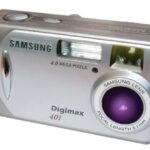
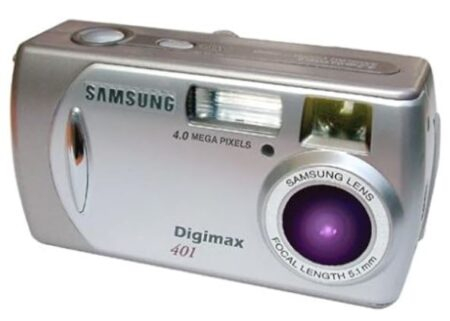
Cast your mind back to the early 2000s. You bought a nice Samsung or Kodak digital camera — maybe 2MP, maybe 4MP. It took beautiful pictures. You printed 4x6s at Walgreens. You emailed photos to your family. Life was good.
Then the marketing machine cranked up. Suddenly your perfectly fine camera was obsolete. The billboard at Best Buy screamed about 6 megapixels. Then 8. Then 12. Then 20. Every year, a new number. Every year, a gentle implication that what you owned was now somehow inadequate — that your vacation photos from last summer were, in retrospect, a little embarrassing.
So millions of people dutifully upgraded. They traded in their 4MP Samsung for an 8MP model, then a 12MP model, spending real money each time. And here’s the dirty little secret the industry never wanted you to figure out:
In fact, many photographers who lived through that era will tell you exactly what you may have experienced yourself: their old 4MP Samsung often produced images that looked better than the later 8MP and 12MP cameras. Why? Because the sensor — the physical chip that captures light — stayed roughly the same physical size while the manufacturers crammed in more and more pixels. Smaller pixels mean less light per pixel, which means more digital noise, which means a muddier image. You paid more money for a technically “better” number that often produced a practically worse photograph.
It was one of the great marketing triumphs of the digital age. And now, twenty years later, the drone industry is running the exact same play — and counting on you not to notice.
The Math They Hope You Never Do
Before we get to drones, let’s lock in one number that will change how you look at camera specs forever. It’s simple arithmetic.
A 1080p video frame — the kind your phone has been shooting for a decade, the kind that looks perfectly sharp on your 55-inch TV — is 1,920 pixels wide by 1,080 pixels tall.
Multiply those together: 1,920 × 1,080 = 2,073,600 pixels.
That’s 2.1 megapixels.
Let that sink in. Every time you’ve watched something on Netflix, every time you’ve admired drone footage on YouTube, every time you’ve said “wow, that looks incredible” — you were looking at a 2-megapixel image. The standard for “looks great on TV” is 2MP.
Quick Reference: Video Resolution in Plain Megapixels
720p (HD) = 1,280 × 720 = ~0.9 MP
1080p (Full HD) = 1,920 × 1,080 = ~2.1 MP
1440p (2.7K) = 2,560 × 1,440 = ~3.7 MP
4K (UHD) = 3,840 × 2,160 = ~8.3 MP
Now let’s talk about what those megapixel counts actually mean in practice — specifically, how large a print you can produce. This is where things get genuinely eye-opening.
The Print Size Truth Table: From 2MP to Drone Cameras
Print sizes below are calculated at 300 DPI (magazine/professional quality) and 150 DPI (display quality — the minimum for a print viewed within 3 feet). Sizes that will surprise you are marked. All sizes assume a standard 3:2 or 4:3 aspect ratio.
| Resolution | What It Is | Max Print @ 300 DPI (Pro/Magazine Quality) |
Max Print @ 150 DPI (Display Quality) |
Verdict |
|---|---|---|---|---|
| ~2.1 MP | 1080p video frame 1,920 × 1,080 px |
6.4″ × 3.6″ | 12.8″ × 7.2″ Nearly a 13″ wide print |
Fine for screen & web |
| ~3.7 MP | 1440p / 2.7K frame 2,560 × 1,440 px |
8.5″ × 4.8″ | 17″ × 9.6″ Solid 17″ wide print |
Great for social & modest prints |
| ~4 MP | Typical “entry” camera 2,464 × 1,632 px (example) |
8.2″ × 5.4″ Clean 8×10 print |
16.4″ × 10.9″ 16×11 — large wall art |
More than enough for most people |
| ~5 MP | Mid-range compact 2,592 × 1,944 px (example) |
8.6″ × 6.5″ | 17.3″ × 13″ A3-size print with room to spare |
Covers nearly every consumer need |
| ✈ Now Let’s Talk Drones | ||||
| ~8.3 MP | 4K video frame 3,840 × 2,160 px |
12.8″ × 7.2″ | 25.6″ × 14.4″ Over 2 feet wide — a poster |
Excellent for any hobbyist use |
| 12 MP | DJI Mini / standard drone 4,000 × 3,000 px |
13.3″ × 10″ A true 13×10 pro print |
26.7″ × 20″ Over 2 feet wide at display quality |
The real sweet spot |
| 20 MP | Mid-tier drone camera 5,472 × 3,648 px |
18.2″ × 12.2″ A2-size print at full quality |
36.5″ × 24.3″ 3 feet wide |
Overkill for most hobbyists |
| “48 MP” | Marketing number* Usually a 12MP sensor in disguise |
*See note below — in most consumer drones, the true optical resolution is 12MP. The 48MP figure comes from a software interpolation technique called pixel-binning. | Often misleading | |
*The 48MP Note: Many drone cameras marketed as “48MP” use what’s called a Quad-Bayer sensor. The chip physically has 12MP of true optical resolution. The 48 million photosites are grouped in sets of four — designed for better low-light performance and dynamic range, not for producing genuine 48MP detail. In bright daylight, shooting in the native 12MP “binned” mode often produces a cleaner, sharper image than forcing the sensor to its un-binned 48MP mode. You’re not getting four times the detail — you’re getting four times the marketing.
So What Does This Mean for Your Drone Budget?
Here’s where this gets personal — and practical.
The drone industry has learned the same lesson the camera industry learned two decades ago: consumers respond to numbers. A drone listed as “48MP 8K” sounds more impressive than one listed as “12MP 4K,” even if the real-world image quality of the 12MP drone is actually better — because its sensor has larger individual pixels that capture more light, produce less noise, and deliver a cleaner final image.
What actually determines the quality of a drone photo or video has very little to do with the megapixel count on the marketing sheet. The things that genuinely matter are:
- Physical sensor size — a 1-inch sensor will outperform a 1/2.3-inch sensor at the same megapixel count, every time, especially in wind and low light.
- Gimbal quality — a 3-axis mechanical gimbal produces far smoother footage than electronic image stabilization alone.
- Lens quality and aperture — a mediocre lens attached to a high-MP sensor will produce mediocre images. Period.
- Dynamic range — the camera’s ability to hold detail in both bright sky and dark ground simultaneously is what separates good aerial shots from great ones.
- Low-light performance — this comes from sensor size and pixel size, not megapixel count. More pixels crammed into the same sensor size actually makes low-light performance worse.
Think about how you actually use your drone footage. You post clips to YouTube. You share photos in a Facebook group. You show the family a video at Christmas on the big TV. You might — maybe once or twice — print a nice shot and frame it. For every single one of those use cases, a 12MP drone shooting 1080p or 4K video is producing images with more resolution than you will ever actually use.
The Viewing Distance Reality Check
Here’s the final piece of the puzzle, and it’s the one the marketing departments absolutely do not want you thinking about.
The human eye has physical limits. At a normal viewing distance — sitting on your couch, say 8 to 10 feet from your TV — your eyes literally cannot resolve the difference between 1080p and 4K on screens smaller than about 65 inches. The pixels are simply too small for your visual system to distinguish them at that distance.
So when you’re watching your drone footage on a 55-inch TV from the couch — which is how approximately 99% of hobbyist drone footage gets watched — your 1080p footage and your “8K” footage are perceptually identical. Your eyes are the limiting factor, not the camera.
The only scenarios where higher resolution genuinely pays off are:
- You are a professional videographer delivering to broadcast standards.
- You need to crop heavily in post-production and still maintain a full-resolution output.
- You are printing images larger than 20×16 inches for display at close range.
- You are doing photogrammetry or surveying work where pixel-level detail at altitude matters.
If you’re a hobbyist flying for fun, shooting family events, capturing travel memories, or building a social media presence — you are not in any of those categories.
The Bottom Line: What You Actually Need
- For casual flying, social media, and family memories: Any drone with a 12MP camera and 1080p or 4K video is more camera than you need. Don’t let a salesperson tell you otherwise.
- For the occasional wall print or larger display: 12MP is genuinely sufficient for prints up to 26 inches wide at display quality. That covers almost any print you’ll ever make.
- What to spend your money on instead: Better gimbal, longer flight time, superior obstacle avoidance, a second battery, and a good carrying case. These improve your actual flying experience. A higher megapixel count does not.
- Ignore the MP number entirely. Look at the sensor size (bigger is better), the gimbal type (3-axis mechanical beats electronic), and real-world user reviews of image quality. Then buy accordingly.
A Final Word to the Over-Enthusiasts
Look — if you’re a serious aerial cinematographer, a professional surveyor, or someone who genuinely delivers content at broadcast 4K standards, you know who you are, and this article isn’t written for you. Go buy the Mavic 3 Pro with the Hasselblad lens and enjoy every pixel of it. You’ve earned it.
But for the rest of us — the weekend warriors, the travel shooters, the folks who want to capture their kid’s soccer tournament from 200 feet up, the pilots who just think it’s the coolest thing in the world to fly a drone and come home with beautiful footage — the megapixel arms race is a tax on curiosity. It takes real money out of your pocket and gives you specs you’ll never use in exchange.
Your old Samsung 4MP point-and-shoot took great pictures because it had a good lens, a reasonably-sized sensor, and thoughtful image processing. The 12MP camera that replaced it sometimes looked worse because it crammed more pixels into the same-sized chip and called it progress.
History doesn’t have to repeat itself. You now have the math. Use it.
Fly smart. Spend smart. The sky looks just as good at 1080p.