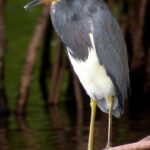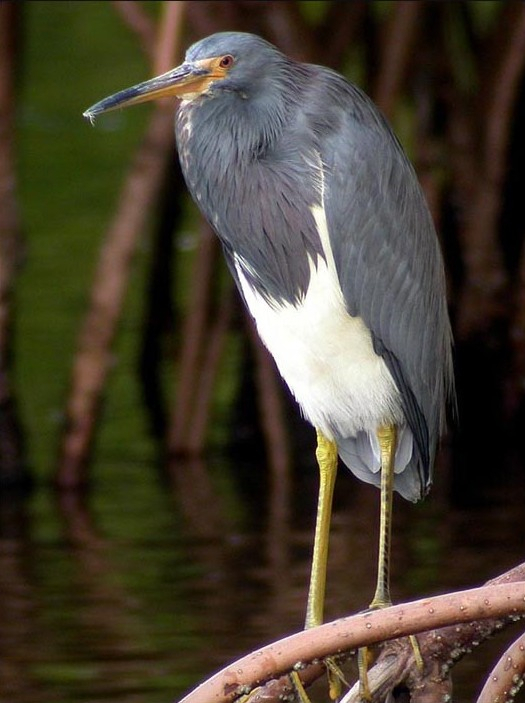
“What you looking at?” A Tri-colored Heron near Tarpon Springs, Florida – Photo by Len Blumin
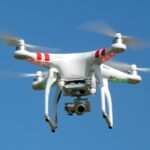
You unbox your shiny new drone, charge the batteries, head outside, and launch. You capture stunning aerial footage of the neighborhood, the local park, maybe a neighbor’s backyard. It feels harmless. It feels like art. It might also be a crime.
A picture may be worth a thousand words — but it could also be worth a few days in the hokey and a fine that stings worse than a sunburn. What seems perfectly innocent to the recreational flyer can look very different to law enforcement, and to the privacy-loving homeowner now starring in your aerial highlight reel without their consent.
Before you ever put that bird in the air, you need to understand the laws of your state. And if you think federal FAA rules are the only rulebook that matters, think again.
Two States, Two Rulebooks: Texas vs. Florida
Let’s look at how two popular drone-flying states handle this — Texas and Florida — because their laws illustrate exactly why you can’t assume you know the rules just because you own a drone.
What Texas and Florida Agree On
Both states share a common foundation when it comes to drone regulations, and these points of agreement are non-negotiable no matter which state you fly in:
- No surveillance of private property. Both Texas (Tex. Gov’t Code § 423.003) and Florida (Fla. Stat. § 934.50) make it illegal to use a drone with an imaging device to capture images of individuals or privately owned real property with the intent to conduct surveillance — without written consent.
- Critical infrastructure is off-limits. Both states prohibit flying over or near power plants, water treatment facilities, chemical plants, pipelines, gas facilities, dams, and similar facilities. Flying too close — even without landing — can be a criminal offense.
- Illegally captured images can’t be used in court. Both states bar illegally captured drone images from being used as evidence in criminal, civil, or administrative proceedings. That doesn’t protect you from prosecution — it just means your footage won’t help anyone else either.
- Governments and contractors get a pass. Federal, state, and local agencies — and their authorized contractors — are generally exempt from restrictions that apply to private citizens.
- Commercial operators must comply with FAA rules. If you’re flying for money or business, both states require full compliance with FAA Part 107 regulations in addition to state law.
- Civil lawsuits are on the table. Property owners in both states can sue you in civil court for unauthorized drone imaging of their property. Think legal fees, damages, and a lot of headaches.
Where Texas and Florida Part Ways
Here’s where it gets interesting — and where many drone operators get tripped up.
- Local government authority — completely opposite. This is perhaps the biggest difference. Florida’s state preemption law (Fla. Stat. § 330.41) gives the state exclusive authority to regulate drone operations in the air. Cities and counties in Florida generally cannot create their own in-flight drone rules. Texas has no such preemption — local governments in Texas can layer on additional restrictions, meaning a city ordinance in Austin or Houston could add rules beyond state law.
- Privacy protection goes further in Florida. Florida’s “Freedom from Unwarranted Surveillance Act” (Fla. Stat. § 934.50) is a dedicated privacy statute with teeth. It establishes that a person on their private property is presumed to have a reasonable expectation of privacy — even from the air — if they can’t be seen by someone standing at ground level in a public place. Texas does not have a comparable standalone privacy statute; its protections are folded into the general drone use chapter.
- Sports venues — Texas-specific offense. Texas law (§ 423.0046) specifically makes it a criminal offense to fly a drone over a sports venue with a seating capacity of 30,000 or more at 400 feet or below — think stadiums, racetracks, and arenas. First offense is a Class B misdemeanor. Florida has no direct equivalent statute for sports venues.
- Reporting requirements — Texas only. Texas requires law enforcement agencies in counties or municipalities with populations over 150,000 to report drone usage to the Governor and Legislature every two years. Florida does not have a comparable public reporting mandate for law enforcement drone use.
- Wildlife is a crime in Florida. Florida’s Fish and Wildlife Conservation Commission rules prohibit using drones to take, harass, or assist in taking any fish or wildlife. Texas has no equivalent drone-specific wildlife provision in its drone statute.
- Takeoff and landing — local authority in Florida. Even though Florida preempts in-air drone regulation, local governments can control takeoffs and landings on public property they own — parks, beaches, public buildings. So you may be able to legally fly over a Florida city beach but be prohibited from launching from it.
Why You Need to Know Your State’s Laws Before You Fly
Here’s the hard truth: the drone manufacturers don’t include a legal guidebook in the box. The app on your phone won’t warn you about state statutes. And “I didn’t know” is not a legal defense.
Consider what’s at stake with an innocent-seeming flight:
- Flying over your neighbor’s backyard while testing a new camera? Potential surveillance offense.
- Hovering near a water treatment plant to get a cool industrial shot? Critical infrastructure violation.
- Capturing a packed stadium for a social media clip? Criminal misdemeanor in Texas.
- Launching from a city park beach in Florida without checking local ordinances? Possible ordinance violation before you even leave the ground.
And these are just two states. All 50 have their own regulatory landscape — some stricter, some more permissive, all different. Add in local ordinances on top of state law (especially in Texas), and the picture gets complex fast.
Before Your Next Flight, Do This
- Look up your state’s drone statute — search “[your state] unmanned aircraft law” or “[your state] drone statute.”
- Check for local city or county ordinances, especially if you’re in Texas or any state without a preemption law.
- Know whether you need a Part 107 certificate if any commercial intent is involved — even a sponsored social media post can qualify.
- Use the FAA’s B4UFLY app to check airspace restrictions, but understand it does not cover state or local privacy laws.
- When in doubt about flying near private property, get written permission from the property owner. Both Texas and Florida recognize written consent as a legal shield.
- If you’re flying in or near a state park, wildlife area, or beach, call ahead — wildlife and conservation rules may apply independently of the main drone statute.
The Bottom Line
Drones are incredible tools for creativity, business, and exploration. The aerial perspective they offer is genuinely breathtaking. But that camera pointed downward doesn’t just capture landscapes — it captures people’s homes, their yards, their private lives. The law takes that seriously, and increasingly, so do the courts.
A few minutes of research before you fly could save you from a criminal charge, a civil lawsuit, a confiscated drone, and a very awkward conversation with law enforcement. Know your laws. Fly smart. Protect yourself and the people below you.
This article is for informational purposes only and does not constitute legal advice. Drone laws change frequently — always verify current statutes in your state before operating.
Related Resources: