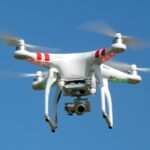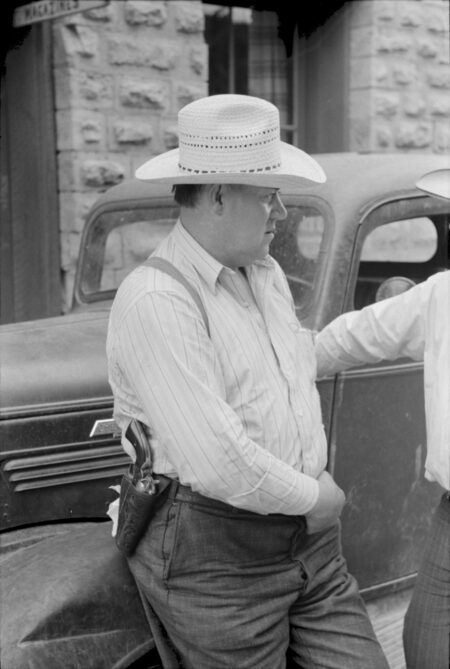
You’ve had a great afternoon flight. Good light, smooth air, some solid footage. Then you hear tires on gravel and look up to see a sheriff’s deputy walking toward you. A neighbor called it in. Now what?
This is the moment most recreational drone pilots are completely unprepared for — not because they did anything wrong, but because they never thought about what their rights actually are when law enforcement shows up at the launch site. Knowing the answer before it happens could be the difference between a polite conversation and an unnecessary legal mess.
The Short Answer: He Generally Cannot Demand to See Your Footage
Your drone footage — stored on an SD card or in onboard memory — is your personal property and private data. A law enforcement officer demanding to view it on the spot, without your consent, would almost certainly constitute an unreasonable search under the Fourth Amendment to the U.S. Constitution. Without a warrant, your voluntary consent, or a recognized legal exception, that footage is yours.
But “generally” is doing a lot of work in that sentence. The real-world situation involves three separate legal questions colliding at the same time, and confusing them is where drone operators get into trouble.
Three Questions Happening at Once
1. Can He Check Your FAA Registration and ID?
Yes — and you are required to comply. The FAA mandates that drone operators present their registration upon request from law enforcement. Officers are authorized to identify you, determine whether you’re flying recreationally or commercially, and assess basic FAA compliance. Think of it like showing a driver’s license during a traffic stop. This is a regulatory check, not a search, and refusing it creates an immediate problem for you.
2. Can He Search Your Drone, Controller, or Footage Without a Warrant?
No — not without your consent, exigent circumstances, or probable cause paired with a recognized warrant exception. The Fourth Amendment protects your personal property and stored data. Absent those legal triggers, a demand to scroll through your footage is not a lawful order — it’s a request you are legally entitled to decline, calmly and clearly.
3. Does What You Actually Filmed Matter?
Very much. This is the trap. If your flight may have captured private property or individuals in a way that could constitute surveillance under your state’s drone statute, the footage could be evidence of a crime you committed. At that point, the officer may have grounds to detain you and seek a warrant. The complaint that brought him to you is already his probable cause foundation — he doesn’t need your footage to start that process.
The Plain View Trap
Here’s one that catches operators off guard. If the officer can see your controller screen while you’re still flying, or if you’ve already pulled up a clip to review it and the screen is visible, anything he observes can become fair game under the plain view doctrine — which allows officers to act on evidence that is openly visible without conducting a formal search.
The practical lesson is simple: if a deputy approaches while you’re reviewing footage on a screen, close it. Not aggressively, not suspiciously — just close it. You are under no obligation to give anyone a free preview of your content.
What Florida and Texas Law Add to This
Both states have drone-specific privacy statutes that cut both ways in this situation.
In Florida, the Freedom from Unwarranted Surveillance Act (Fla. Stat. § 934.50) restricts law enforcement from using drones to gather evidence without a warrant. It also establishes that a person on private property is presumed to have a reasonable expectation of privacy — even from the air — if they couldn’t be seen by someone standing at ground level in a public place. That presumption protects the neighbor who complained, meaning your footage of their property could be evidence of a statutory violation. It also means law enforcement cannot simply seize your device to go looking for violations without legal process.
In Texas, Government Code § 423.003 makes it an offense to capture images of individuals or private property with intent to conduct surveillance. Critically, Texas law also provides that illegally captured images cannot be used as evidence in any criminal, civil, or administrative proceeding — but that protection runs to others using your footage against third parties, not necessarily to protect you from prosecution for capturing it in the first place.
The Courts Are Still Catching Up
Fourth Amendment law around drone footage is genuinely unsettled, and that uncertainty matters to you as an operator.
Older Supreme Court cases — California v. Ciraolo (1986) and Florida v. Riley (1989) — held that police observation from public navigable airspace did not require a warrant, reasoning that what was visible from the sky carried no reasonable expectation of privacy. Those cases involved manned aircraft at high altitudes and gave law enforcement broad latitude.
More recent decisions have started pushing back. In Long Lake Township v. Maxon, the Michigan Court of Appeals held that drone surveillance of private property is “qualitatively different” from airplane or helicopter flyovers because drones operate at much lower altitudes, can hover in place, and capture intimate detail that a high-altitude aircraft never could. The court found that a warrant was required.
The legal trend is toward stronger privacy protections for drone-related searches, but it is uneven, state-by-state, and no binding Supreme Court ruling specifically addresses drones yet. That gray zone is exactly why knowing your rights — and not waiving them accidentally — matters so much.
How to Handle the Encounter: A Practical Rundown
If a deputy walks up following a neighbor’s complaint, here is how to handle it without escalating the situation or surrendering your rights:
- Be calm and cooperative on identity. Provide your name and show your FAA registration. Do not be confrontational. Starting a fight about your rights before you even know what he wants is a bad strategy.
- Do not voluntarily show your footage. You can say, clearly and without attitude: “I’d prefer not to share footage without speaking to an attorney. Do you have a warrant?” That is a complete, legally sound response.
- Do not consent to any search. If he asks to look at your drone, your controller, your bag, or your phone, state plainly: “I do not consent to a search.” Say it once, say it calmly, and do not physically resist — but make sure it is on the record.
- Do not lie. You are not required to answer questions beyond basic identification in most states, but you should never fabricate a story about where you were flying or what you captured. A lie becomes its own crime and destroys any credibility you have later.
- Invoke your right to counsel if questioned further. “I’d prefer to answer questions with an attorney present” is your right and a smart exercise of it.
- Know your flight logs. FAA Part 107 commercial pilots are required to maintain flight records. Those records are yours. An officer cannot demand them without legal process any more than he can demand your camera roll.
- If detained or arrested, do not resist. Assert your rights verbally. Let an attorney sort out the rest. Resisting a detention — even an unlawful one — creates additional charges and never helps.
The Complaint Itself Is Not Evidence You Did Something Wrong
A neighbor calling the sheriff because they saw a drone overhead does not mean you broke the law. Flying over someone’s property is not automatically illegal. Capturing an image from navigable airspace is not automatically surveillance. The complaint starts an investigation — it is not a verdict.
That said, if you were flying low over a fenced backyard, hovering near windows, or targeting a specific individual or property, the complaint is going to find a lot of law to back it up in both Texas and Florida. The best protection in that encounter is the one you built before you launched — knowing the statutes, flying within them, and having nothing on that SD card that crosses the legal line.
The Bottom Line
A sheriff responding to a drone complaint can identify you and verify FAA compliance. What he cannot do — absent a warrant, your consent, or a recognized legal exception — is demand to review your footage on the spot. Your Fourth Amendment rights do not disappear just because a neighbor is unhappy about your afternoon flight.
Know your rights. Exercise them calmly. And do the legal homework before you fly, so the footage on that card is the least of anyone’s concerns.
Related Resources:
- Texas Government Code Chapter 423 – Use of Unmanned Aircraft
- Florida Statutes § 934.50 – Freedom from Unwarranted Surveillance Act
- FAA – Law Enforcement and Drone Sighting Guidance
- Electronic Frontier Foundation – Backyard Privacy in the Age of Drones
This article is for informational purposes only and does not constitute legal advice. Laws vary by state and change frequently. If you are confronted by law enforcement in connection with drone operation, consult a licensed attorney in your state.